WordWhizzle Pop
Apprope ABWord
4.63.92K Reviews
- Version
- 1.4.8
- Installs
- 100.00K
- Age Rating
- Everyone
Screenshots
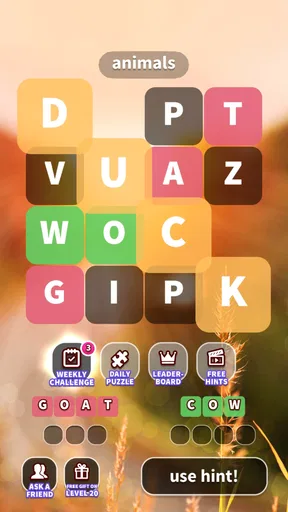
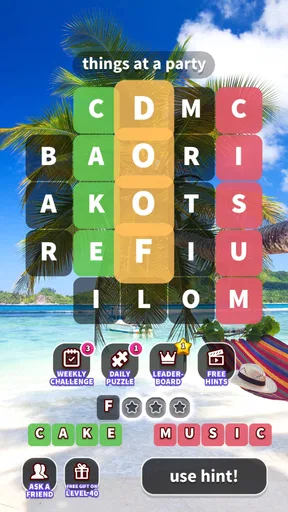
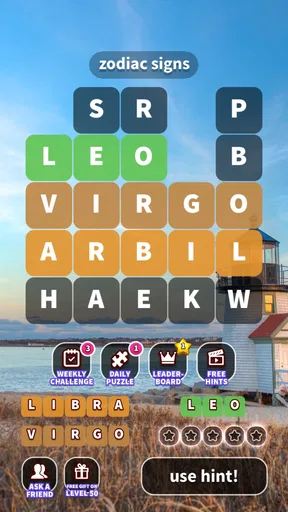
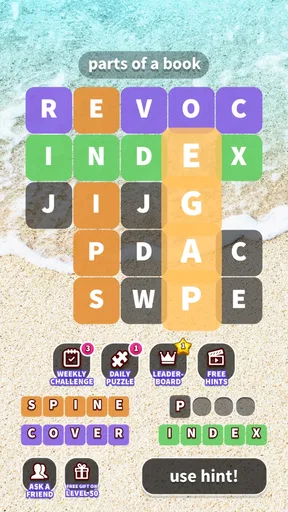
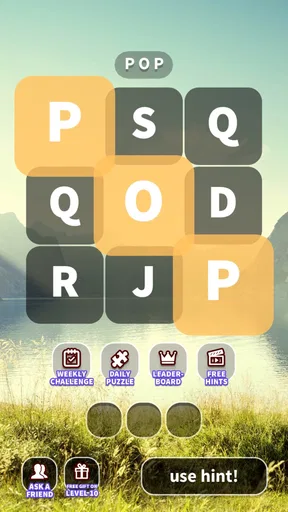
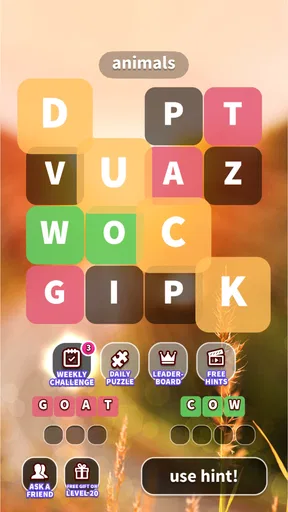
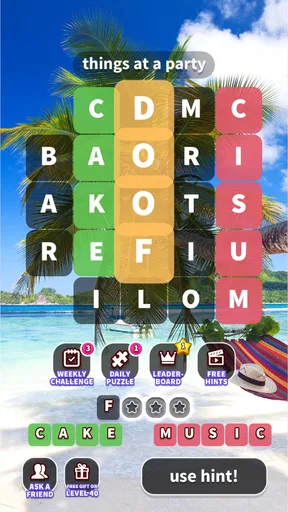
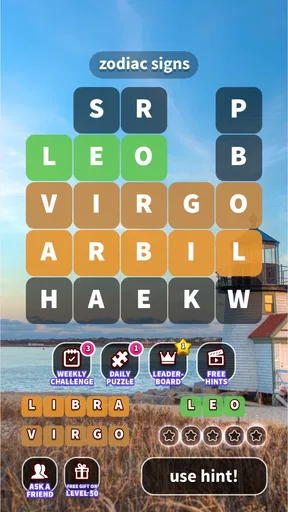
Our Review of WordWhizzle Pop
 Analysis by Appyee
WordWhizzle Pop is the kind of word game I open when I want something light, quick, and more focused than a scrolling break. Its central idea is simple: solve word-search puzzles while the presentation gives each round a lively, pop-inspired feel. That combination makes it approachable immediately, but the real question is whether the style supports the puzzles or gets in their way. After spending time with it, I found that its strongest appeal comes from the way short bursts of word hunting create a steady rhythm without demanding a large time commitment.
As a free word game from Apprope AB, it is easy to try without making a commitment. The app is suitable for Everyone, and its broad appeal is reflected in a 4.6 average from around 15 thousand ratings, with more than 100 thousand installs. Those figures suggest that it has found a comfortable place among casual puzzle players, but they do not tell you whether it suits your particular taste. I would recommend it most readily to someone who enjoys visual word searches and wants a colorful change from the familiar daily-word format.
The first thing I noticed was how quickly the game gets to its point. There is no need to learn a complicated rule set before playing. You look for words, connect the letters in the intended way, and keep moving. That low barrier matters because word games often lose their charm when their menus, tutorials, or scoring systems become more prominent than the puzzle itself. Here, the basic interaction remains the center of attention.
How the presentation shapes the first impression
The “Pop” identity gives the game a more energetic personality than a plain grid of letters. The visual direction feels designed to make each puzzle seem like a small event rather than a worksheet. Bright presentation and compact rounds help the app feel welcoming, especially when I am playing for only a few minutes. It is not aiming for a quiet, literary mood or a serious brain-training atmosphere; it wants to feel cheerful and active.
That choice has an important consequence. The game is easier to pick up when I am tired because the overall tone does some of the motivational work. I do not need to create a serious study mindset before starting a round. At the same time, players who prefer restrained interfaces may find the presentation more animated than necessary. The art direction is part of the experience, not a neutral frame around it, so your reaction to the style will affect how long you want to keep playing.
I also like that the setting does not appear to compete with the word task. The visual identity gives the puzzles a recognizable home, but the letters remain the practical focus. That balance is harder to achieve than it sounds. Too little personality makes a word search feel disposable, while too much decoration can slow recognition and make the board tiring to read. In my experience, WordWhizzle Pop generally stays on the useful side of that line.
For an everyday example, I can imagine opening it while waiting for a coffee, sitting on public transport, or taking a short break between tasks. A round does not require the kind of uninterrupted attention that a long story game needs. I can play actively for a few minutes, put the phone down, and return later without feeling that I have abandoned a complicated chain of events. That flexibility is one of its most practical strengths.
A visual language built around finding, not wandering
The game’s world language is expressed through the way it frames words as things to discover. Instead of asking me to manage a character, explore a map, or follow a narrative, it turns recognition itself into the action. The visual treatment makes the board feel lively, but the underlying experience remains about scanning, comparing, and spotting patterns.
That focus makes the app different from a conventional crossword. Crosswords usually ask me to interpret clues and produce an answer, while this game emphasizes locating words within a field of letters. It is also different from a daily five-letter guessing game, where the challenge is narrowing down one answer through repeated attempts. WordWhizzle Pop is better suited to players who enjoy visual search and word familiarity more than clue solving.
The distinction matters when deciding whether to install it. If you enjoy the satisfaction of seeing a hidden word emerge from a crowded board, the format is immediately understandable. If your favorite part of word games is building an answer from a cryptic clue, analyzing definitions, or competing against a strict daily limit, this may feel less intellectually layered. It offers a different kind of concentration rather than a universal replacement for every word puzzle.
One useful way to play is to change how I scan the board. Instead of reading every letter in order, I first look for unusual combinations, repeated vowels, or likely word endings. Then I check whether those fragments can extend in a sensible direction. This approach reduces the feeling of staring randomly at the screen and turns the search into a repeatable process. It is a small habit, but it makes difficult boards feel more manageable.
Another practical tip is to pause before making a fast selection when several possible words appear close together. In a word-search game, the first recognizable pattern is not always the intended answer. I get better results by checking the complete path and considering whether another nearby arrangement is more plausible. That habit is especially useful for players who tend to rush once the visual pace becomes energetic.
Sound, rhythm, and the feel of a short session
The audio and feedback are most valuable when they reinforce the timing of play. A word game can become strangely flat if every successful find feels identical to every other action. WordWhizzle Pop benefits from a more upbeat rhythm: searching creates anticipation, a discovery provides a small release, and the next challenge arrives before the moment loses energy.
I would not describe the mood as relaxing in the same way as a minimalist puzzle with soft, slow presentation. Its personality is more alert and playful. That makes it a good fit for a quick mental reset, but not necessarily for someone looking for a completely quiet bedtime game. If I want to unwind without stimulation, I would choose a calmer alternative. If I want to wake my attention up for a short break, the pop-oriented tone works better.
The pacing also influences how I judge mistakes. When a game moves quickly, an incorrect selection can feel more frustrating because it interrupts the flow I have just established. I found that the best approach is not to treat every round as a test of speed. I search carefully first, then let the presentation carry me forward once I am confident. That preserves the lively mood without turning the session into a frantic race.
This is where the app’s atmosphere and mechanics meet most clearly. The presentation encourages momentum, while the word search still rewards patience. Players who understand that tension will probably enjoy it more than those who assume the brightest or fastest-looking action is always the correct one. The game feels strongest when I use the energy as encouragement rather than as pressure.
Where the mechanics fit—and where they do not
At its core, this is a straightforward word-puzzle experience, and that simplicity is both its advantage and its limitation. I can understand the objective almost instantly, which makes it friendly to newcomers and suitable for occasional play. I do not need to remember a large inventory of abilities, study a complicated economy, or prepare a strategy before starting.
The trade-off is that players seeking deep long-term systems may eventually want more variety than the basic word-search structure provides. The satisfaction comes from recognition and completion, not from developing a character or unlocking a complex set of tactical options. That does not make the game shallow by default, but it does define the kind of engagement it offers. It is a repeatable mental activity, not a substitute for a full adventure or competitive word league.
Compared with a traditional word-search book, the digital format is more convenient and more responsive. I can carry many puzzles without carrying anything extra, and the interactive feedback makes each find feel more immediate. Compared with a crossword app, it asks less of my vocabulary in one sense because I am locating words rather than solving detailed clues, but it asks more of my visual attention. Compared with a daily guessing game, it gives me a different reason to return: the pleasure of scanning and completing a board rather than protecting a streak.
That comparison also reveals who should skip it. I would not choose WordWhizzle Pop for someone who dislikes visual clutter, gets eye strain from searching grids, or wants every puzzle to teach a new word through a definition. I would also look elsewhere if strict competitive timing is the main attraction. The app’s appeal is its accessible, rhythmic search experience, not a specialized challenge for crossword experts.
For everyone else, there are a few ways to get more from it. I recommend playing in short sessions at first instead of trying to force a long marathon. The format works naturally in small intervals, and stopping while the mood is still enjoyable helps prevent the repeated-board feeling that can affect any focused puzzle game. I also find it useful to alternate between fast rounds and slower, deliberate searches so the experience does not become automatic.
Another trade-off involves the free-to-play structure. The game is free to download and play, but it includes in-app purchases ranging from $0.99 to $49.99 per item. That range is worth keeping in mind before treating the app as a completely cost-free experience. I would start with the free version and decide only after I know whether the puzzle loop genuinely fits my habits. Players who dislike optional spending in casual games should be especially deliberate about checking purchase prompts before confirming anything.
The current version is 1.4.8, and the listed minimum operating system is Android 4.4. That makes the game accessible to people using older Android hardware, at least from a compatibility perspective. I still would not assume that every older phone will feel equally comfortable for a visually busy word game; screen size, brightness, and touch accuracy can affect the experience. On a compact display, careful searching may feel more tiring than it does on a larger one.
Who will enjoy the mood most?
I think the best audience is someone who wants a friendly word game with a clear identity. It suits casual players, families looking for an Everyone-rated puzzle, and people who prefer short sessions to lengthy campaigns. It can also work for anyone trying to replace passive phone checking with an activity that asks for at least a little attention without becoming demanding.
The game is less suitable for players who need a strong narrative setting. Its world is atmospheric rather than story-driven; the “pop” feeling comes from presentation and rhythm, not from characters with ongoing arcs or a detailed fictional place to explore. If you install it expecting a music-themed adventure, you may find the setting lighter than anticipated. If you want a word search with a distinct mood, that same restraint is a benefit.
I would also be cautious about recommending it as a serious language-learning tool. Searching familiar words can support recognition and mental flexibility, but the game is not the same as a structured vocabulary course. It is better viewed as entertainment with a language-based mechanic. That distinction prevents disappointment and makes the app easier to appreciate on its own terms.
My atmosphere verdict after repeated play
What stays with me is the coherence between the art direction, the sound-led rhythm, and the simple search mechanic. None of those elements tries to become the entire show. The visuals make the board feel inviting, the pacing keeps a successful find from feeling flat, and the word search gives the presentation a practical purpose. When those parts line up, even a short session feels more intentional than ordinary idle scrolling.
Its limitations are equally clear. The core format will not satisfy everyone, particularly players who want clue-heavy puzzles, deep progression, or a calm minimalist interface. The free-to-play model also deserves a careful look, especially for anyone who prefers to avoid optional purchases altogether. These are not minor details; they determine whether the game feels like a convenient daily companion or a brief novelty.
Still, I would recommend WordWhizzle Pop to a friend who enjoys visual word searches and wants a bright, easy-to-start game for spare moments. Apprope AB has built its appeal around a specific mood rather than trying to turn a simple puzzle into something it is not. If you approach it as a lively collection of short word challenges, its presentation supports the mechanics well. If you want a quieter, clue-driven, or more strategically complex alternative, another word game will probably serve you better.
My final advice is to judge it by the first few sessions, not by the store summary alone. Notice whether the pop-styled presentation helps you stay engaged, whether the search rhythm feels satisfying, and whether the basic format gives you enough variety. For the right player, the answer will be yes: it is a cheerful, accessible word game that makes a familiar activity feel more animated without burying the letters beneath its style.
Verdict
Strengths of WordWhizzle Pop
- Quick rounds make it easy to play during short breaks.
- Colorful visuals and sound effects give the game a lively feel.
- Many word puzzles provide plenty of content to work through.
- Simple controls are suitable for casual players of most ages.
- The game helps exercise vocabulary and pattern-recognition skills.
Limitations of WordWhizzle Pop
- Some puzzles may feel repetitive after extended play sessions.
- Difficulty can vary noticeably between consecutive levels.
- Hints may be limited, making obscure words frustrating to solve.
- Progress can feel slow if you avoid optional purchases.
- Ads may interrupt the experience, depending on the version and device.
Other Releases by Apprope AB
View All
WordBubbles
Word4.4

WordWhizzle Connect
Word4.6
Similar Picks in This Category
View All
Word Search - Word Puzzle Game
Bluetile4.8

Word Search Quest - Puzzles
Blackout Lab4.8

CodyCross: Crossword Puzzles
Fanatee, Inc.4.7

Words of Wonders: Crossword
Fugo Games4.9

Wordscapes: Word puzzle game
PeopleFun4.7

Word Search Explorer
PlaySimple Games4.9
Frequently Asked Questions
What is WordWhizzle Pop and how is the game played?
WordWhizzle Pop is a casual word puzzle game built around finding and connecting letters to create words. After installing it, players generally progress through short, themed levels that become more challenging over time. The simple tap-and-swipe controls make it easy to start, while limited moves, tricky letter layouts, and increasingly specific word objectives provide enough difficulty to keep experienced puzzle fans interested.
Is WordWhizzle Pop free to download and play?
WordWhizzle Pop can typically be downloaded for free, allowing players to try its main puzzles without paying upfront. However, free gameplay may include advertising, optional purchases, or both. Depending on the version available for your device, purchases can provide hints, remove ads, or unlock other conveniences. It is worth checking the store listing and in-app purchase details before downloading, especially on a shared device.
Does WordWhizzle Pop work without an internet connection?
Many of the core word puzzles in WordWhizzle Pop may be playable offline once the necessary game data has loaded, which is useful during travel or when mobile data is limited. Nevertheless, an internet connection can be required for advertisements, purchases, updates, analytics, or certain bonus features. Offline availability may also vary between Android and iOS versions, so players should test the game before relying on it without connectivity.
Is WordWhizzle Pop suitable for children and beginners?
WordWhizzle Pop is generally approachable for beginners because its controls are uncomplicated and the early stages usually introduce the word-finding mechanics gradually. It can also be useful for players who enjoy vocabulary practice and short mental challenges. Parents should still review the game’s advertising, optional purchases, privacy information, and age rating, since these details can differ by platform and may affect whether it is appropriate for younger children.
Does WordWhizzle Pop offer hints, progression, or replay value?
The game’s progression is based on completing word puzzles and moving through additional stages, with difficulty usually increasing as new layouts and objectives appear. When a level becomes difficult, players may have access to hints or other assistance, although these resources can be limited or connected to optional purchases. Replay value comes from improving results, solving missed words, and continuing through the expanding collection of themed challenges.
Play our best games!


